What the walk between installations reveals about Coachella’s visual identity in 2026
The route between major stages is doing more curatorial work than ever, turning movement itself into part of the festival’s design language.
Movement as composition
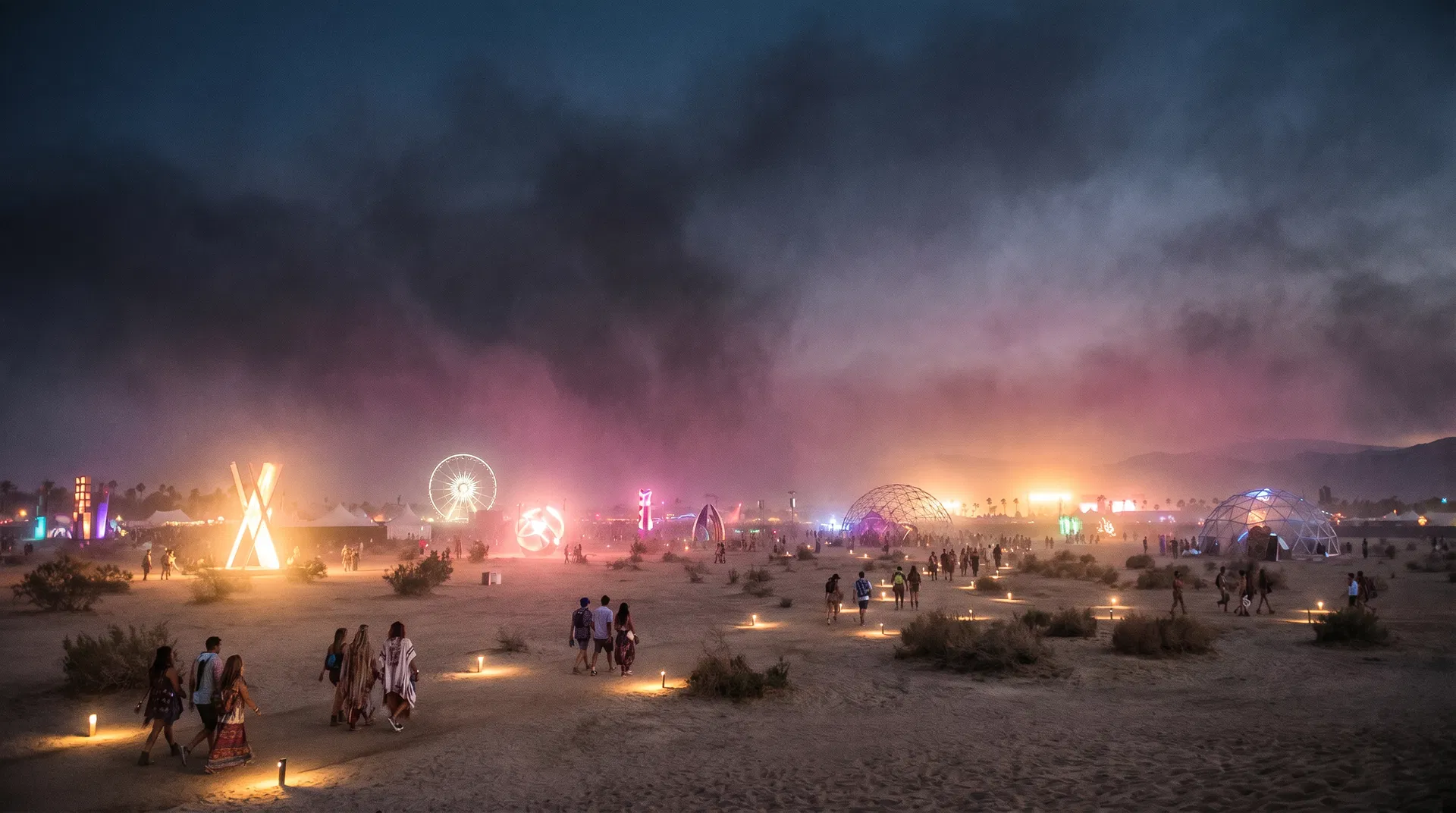
The most striking part of the grounds this year is that the pathways do not feel like neutral transitions. They feel staged. Installations are positioned so that groups moving between them become part of the composition, especially at dusk when the low light catches suspended dust and reflective fabric.
That means the festival is not only presenting isolated visual statements. It is producing a chain of scenes, each one activated by bodies in motion.
A more legible night palette
Compared with previous years, the visual language is more controlled. There is more negative space around the brighter structures, which allows the eye to recover between bursts of color. The result is a grounds experience that feels cinematic instead of crowded.
Coachella’s strongest design move this year is restraint.
What the corridors communicate
Even before a reader reaches the next stage, the atmosphere has already adjusted expectations. Warm light paths suggest intimacy; cooler light sequences imply acceleration and anticipation. In practice, the festival is using circulation to edit emotion before the music begins again.
Related coverage
Continue reading the live desk.
Style Watch
Desert dressing after dark: the style signals that read strongest under festival light
The strongest looks were not the loudest. They were the ones that understood how fabric, dust, and low light would collaborate after sundown.
Open article