How the Sahara tent turned into the pulse center of the desert after sunset
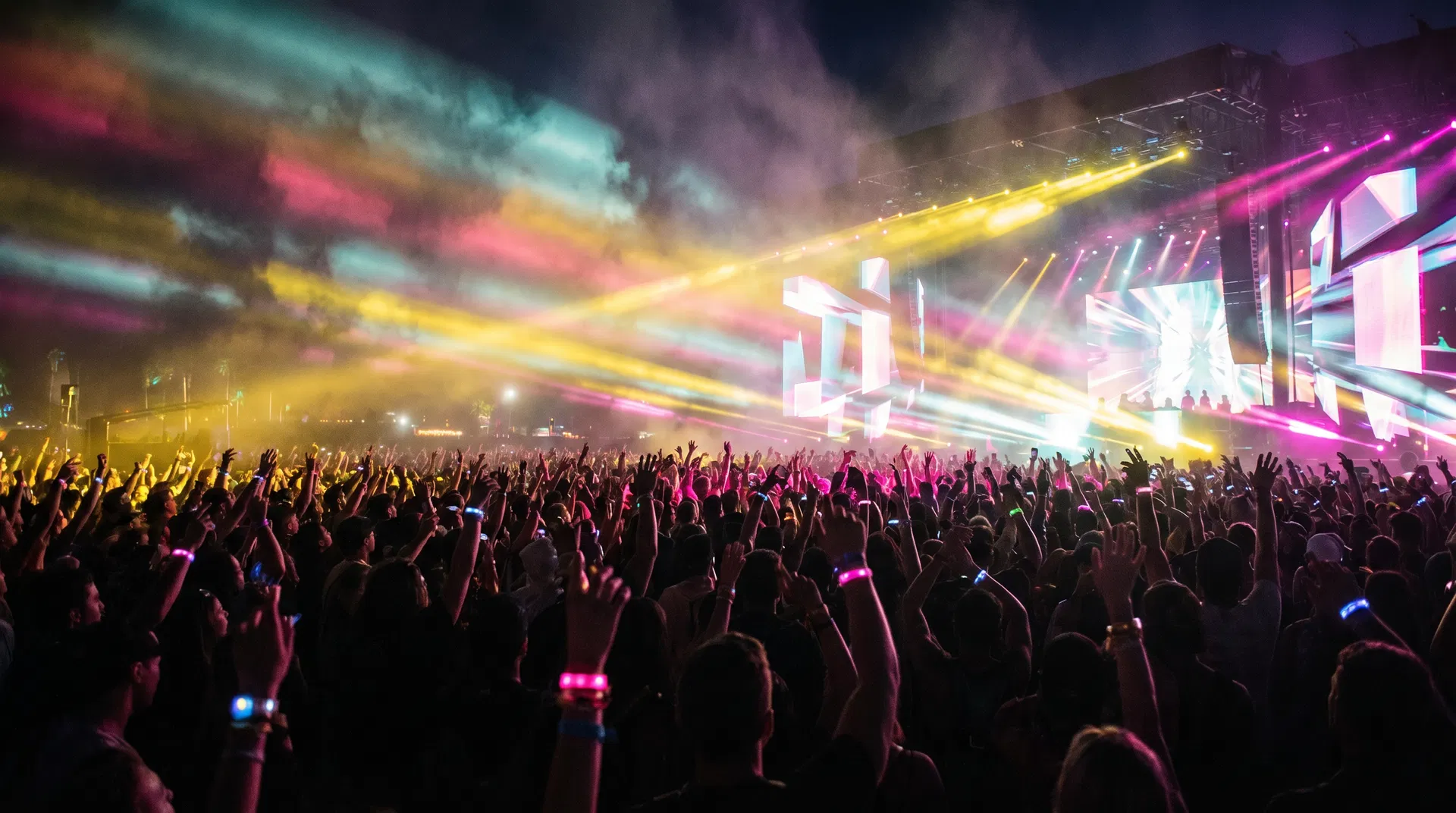
What began as a technical showcase evolved into the set that made the night feel physically synchronized, with beams, dust, and bass locking the crowd into one shared rhythm.
The shift from spectacle to momentum
The first ten minutes looked engineered for documentation: massive LED geometry, crisp transitions, and enough visual contrast to flood every raised phone in the room with content. Then the pattern changed. The drops stopped feeling like cues for recording and started working as physical instructions for the crowd.
That transition mattered because the tent stopped behaving like an audience container and started behaving like a pressure chamber. People who had been filming lowered their screens, began moving in wider arcs, and turned toward one another rather than only toward the stage.
The most important moment was not the loudest one. It was the instant the audience abandoned proof and chose presence.
Why the lighting design landed
The palette never became random. Gold wash moments widened the space, magenta tightened it, and pale cyan created the sensation of air cutting across the room. That rhythm gave the set a readable emotional sequence rather than a generic high-intensity blur.
Combined with the dust already suspended in the tent, the beams produced real spatial depth. You could see the music moving across bodies, not just hear it.
What remains after the encore
The lasting impression is not only that the artist delivered. It is that the Sahara tent briefly became the place where Coachella’s scale still felt intimate. That is difficult to do in a set built for maximum impact, and it is what made the performance memorable beyond its technical ambition.
Related coverage